CASE STUDY
N° 001 / 003
HUG MEDICAL — 2024
Making Medication a Habit, Not a Task.
A smart medication reminder system for older adults living at home and managing multiple prescriptions — letting technology fade into the background so taking medication on time becomes effortless.
ROLE
Product Designer (Only Designer)
TIMELINE
6 months
PLATFORM
IoT Smart Sticker
+ Mobile App & Web Portal
TEAM
1 PM
3 Engineers
01 - IMPACT
Measurable Impact across every metric.
4.6/5
USER satisfaction
82
System Usability Scale (SUS)
+30%
Faster information comprehension
02 - PROBLEM SPACE
A 15% Gap between prescription and intake.
THE NUMBERS
9 out of 10 older adults take multiple prescription medications every day. Adherence sits around 84.8% — leaving a 15% gap that drives avoidable health risks and hospital readmissions.
WHY CURRENT SOLUTIONS FALL SHORT
Pill repackaging is risky. Most tools require transferring medications into new containers, which increases the chance of confusion and error.
Apps are too complex. Existing reminder apps assume a level of tech fluency many older users don't have.
Caregivers are flying blind. There's no easy way to see whether a
patient is actually taking their medication as prescribed.
03 - STAKEHOLDER SYSTEM
Four Stakeholders, one shared record.
Not every stakeholder interacts with the app directly, but each one shapes the user flow
and the information hierarchy.
PRIMARY USERS
Older Adults
Take the medications. Need simple reminders and easy-to-use tools to manage multiple prescriptions.
SECONDARY USERS
Caregivers
Monitor adherence and assist with setup. Want visibility without constant check-ins - and peace of mind.
OCCASIONAL USERS
Clinicians
Need accurate data and quick summaries to manage treatment plans across many patients.
INDIRECT USERS
Insurance Company
Aim to reduce hospital readmissions and need proof of adherence to justify coverage.
04 - USER RESEARCH
In their own Words.
We interviewed older adults and clinicians - oncologists, pharmacists, surgeons, and nurse practitioners - to understand their firsthand experiences with medication management.
"I have mild cognitive impairment. I have to set a lot of alarms and reminders every day just to keep up with my medications and supplements."
- OLDER PATIENT · COGNITIVE IMPAIRMENT
"It's mostly when my routine changes - Fridays, weekends - those are the days I either miss a dose or can't remember if I actually took it."
- OLDER PATIENT · ROUTINE-DEPENDENT FORGETTING
"A huge portion of my appointments is spent just figuring out what medications a patient is on and whether they're taking them as prescribed."
- CLINICIAN
"I don't really like technology. I've downloaded health
apps before, but I basically never use them."
- OLDER PATIENT · TECH AVOIDANCE
04 - KEY PAIN POINTS
Three pain points that Shaped Every Decision.
01
Routine-based forgetfulness
When daily routines shift - weekends, travel, holidays - older adults frequently miss doses or lose track of whether they've already taken their medication.
02
Communication Gaps
Patients and caregivers lack a reliable, shared record of medication intake, leading to repeated check-ins and uncertainty on both sides.
03
Tech anxiety and avoidance
Many older adults are unfamiliar with technology and lack confidence using it. Even when they download health apps, they rarely engage with them.
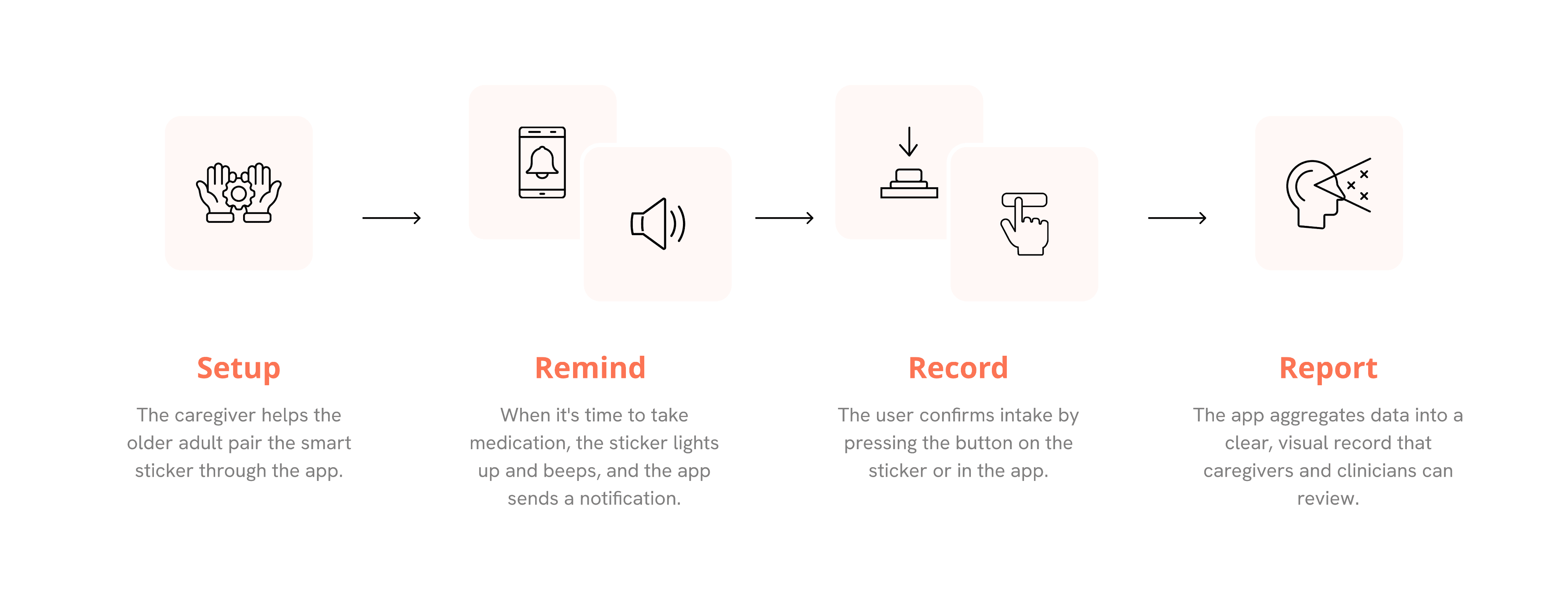
06 - USER JOURNEY
Setup → Remind → Record → Report
05 - SOLUTION
One Sticker, one Tap, one clear Picture.
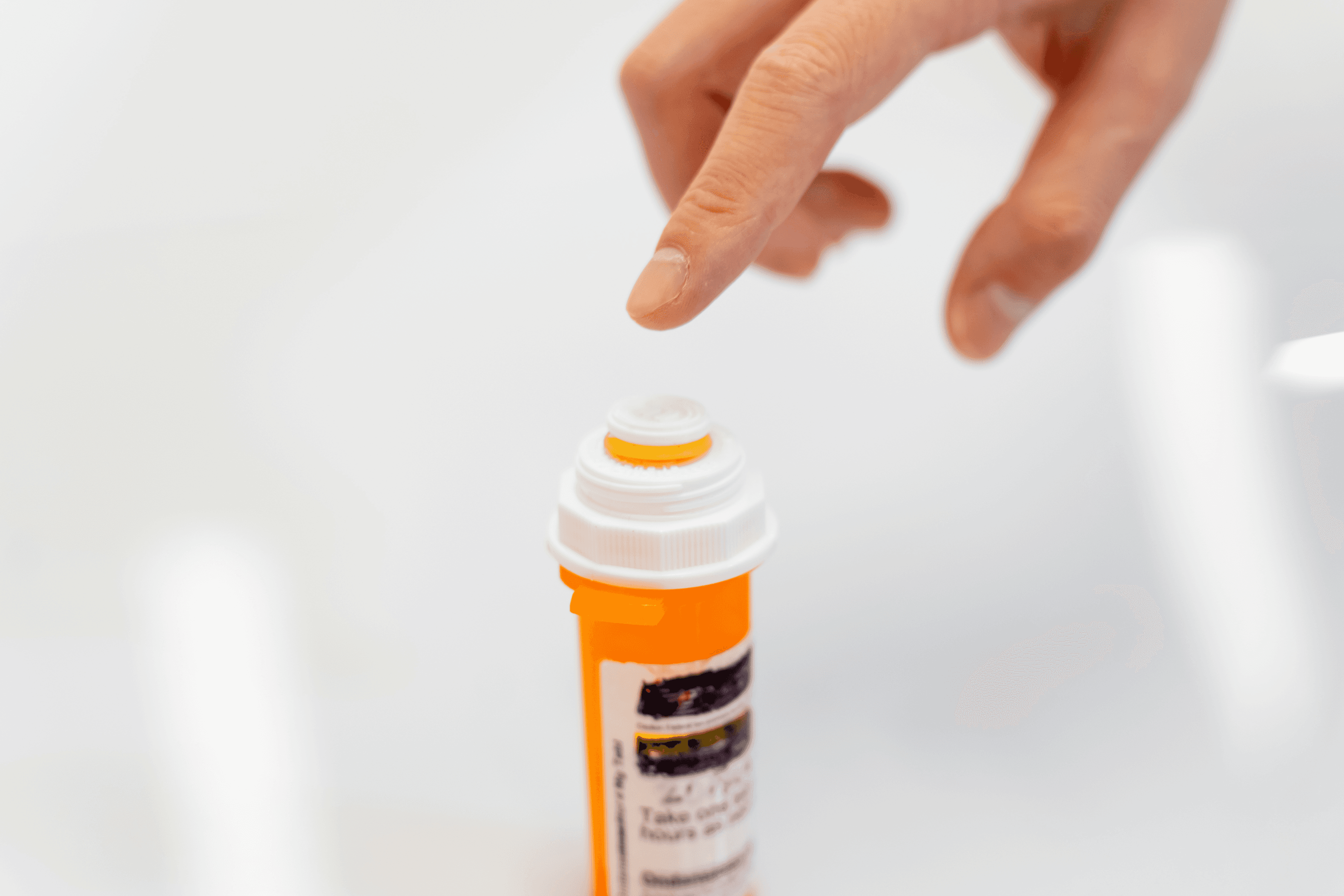
A1 · SMART STICKER
A low-friction IoT Device that attaches to existing pill bottles.
Sticks onto the original bottle - no repackaging, no confusion.
One press = one dose recorded.
Bluetooth syncs to the app in real time.
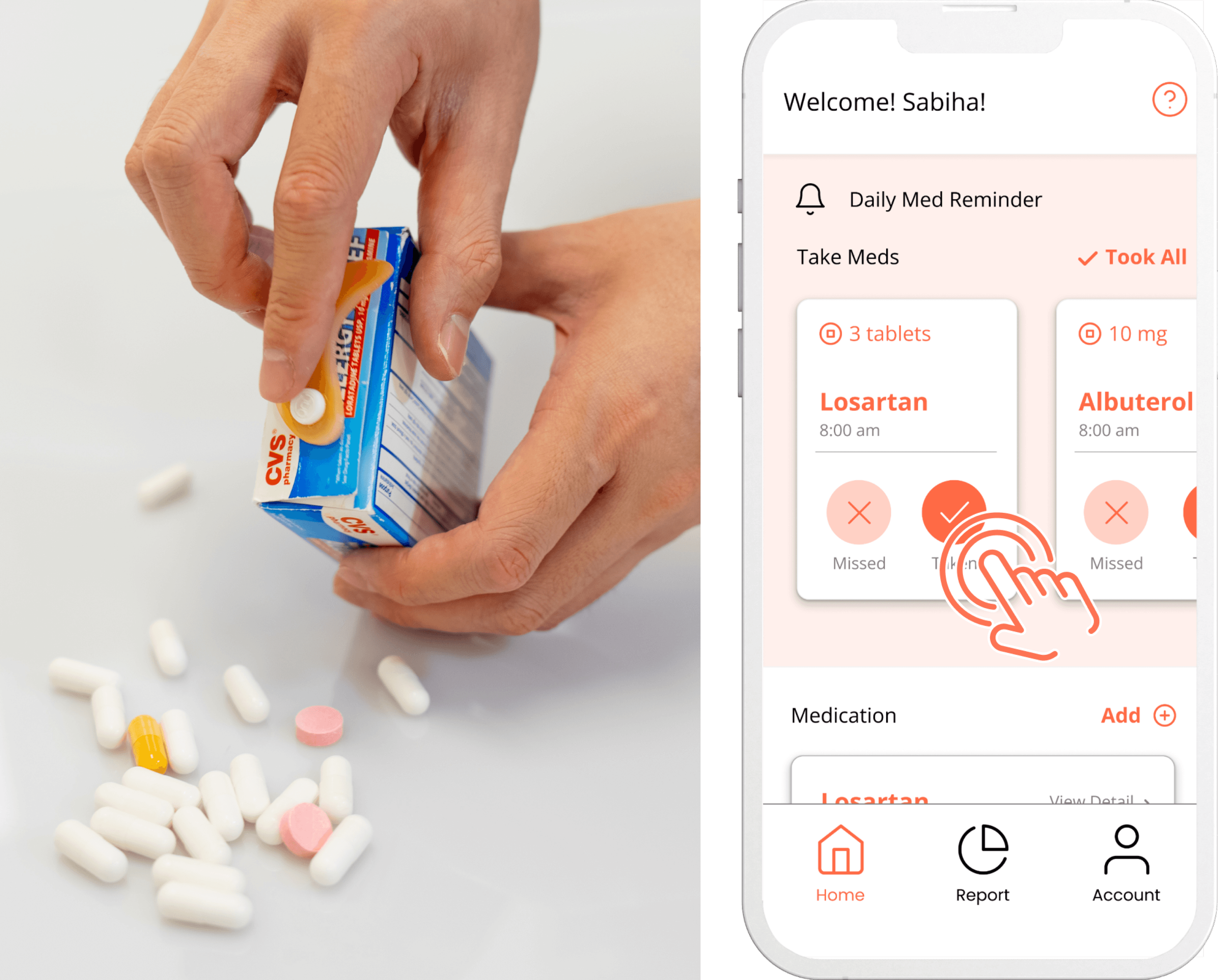
A2 · ONE TAP INTERACTION
A single button that Removes the Friction of recording.
Once setup is complete, users only need to press one button to record an intake - minimizing both cognitive load and physical effort.
Reduces cognitive load for older users
Lowers the rate of operational errors
Increases willingness to keep using the system long-term
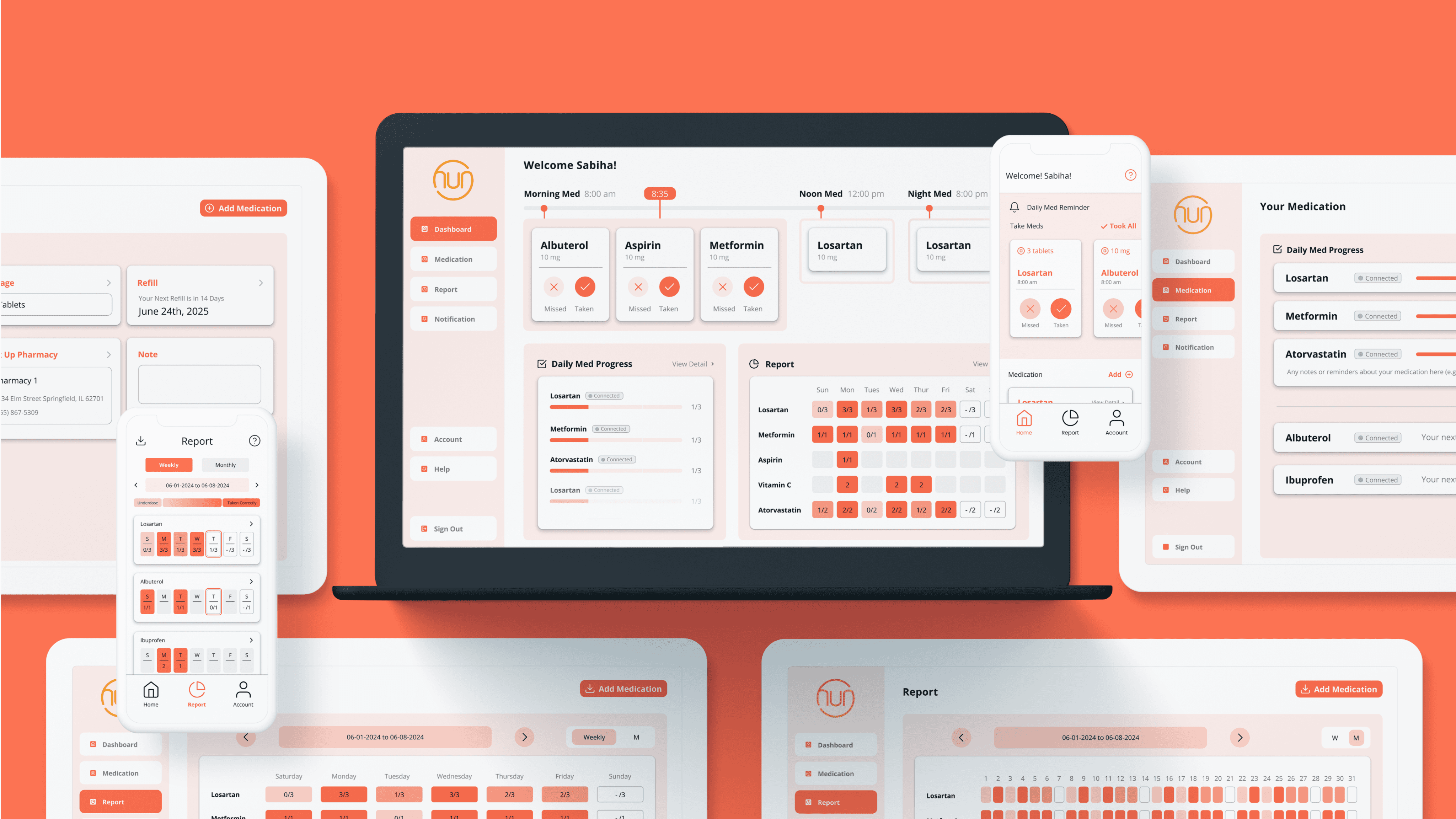
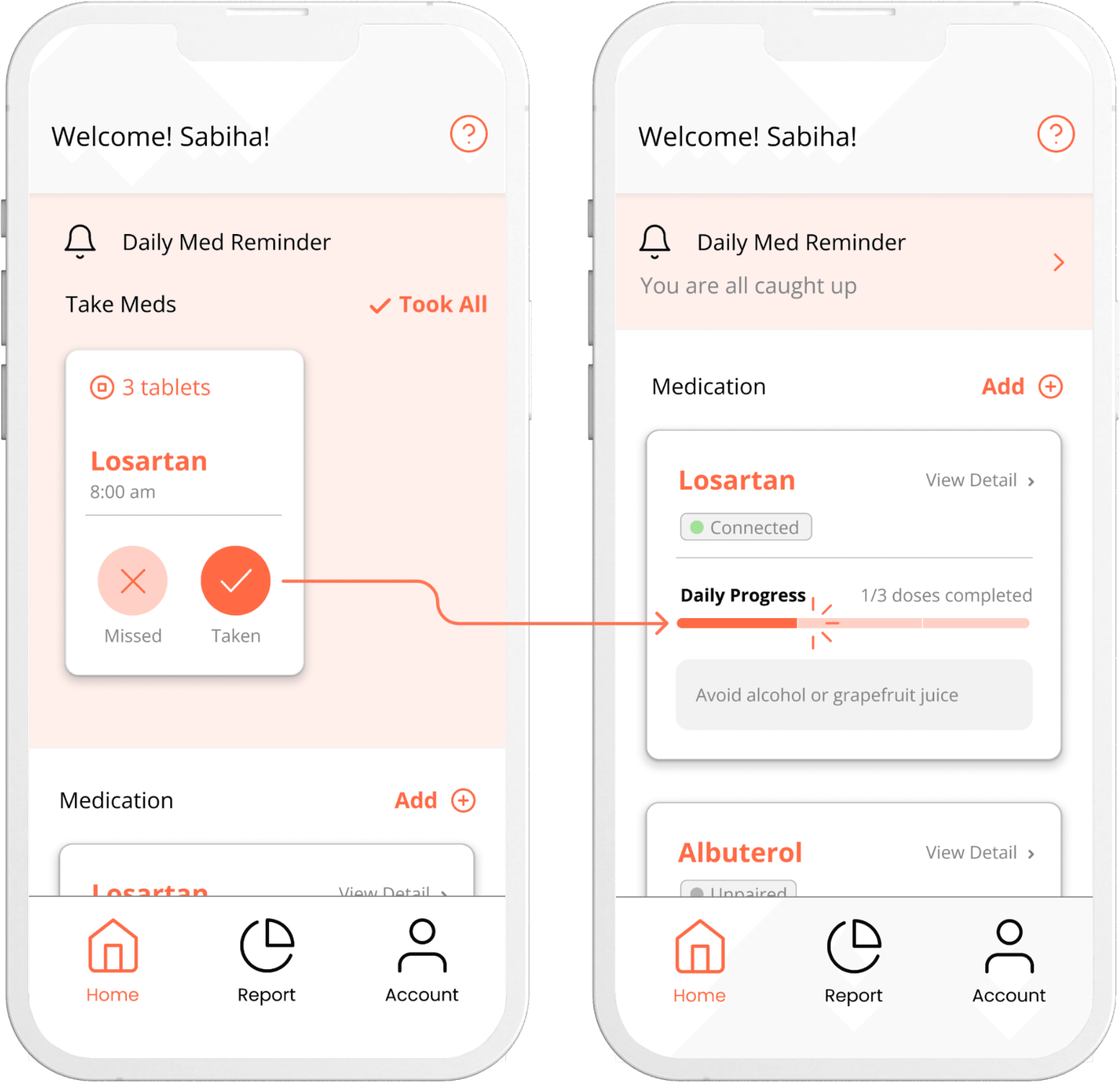
B · DAILY MEDICATION PROGRESS
The Full Picture of today’s medication.
Upcoming and completed doses are always visible - users know where they stand.
Two-way sync with the sticker: the sticker triggers reminders; the app acts as a reliable backup.
Reduces missed-dose anxiety with clear, glanceable progress.
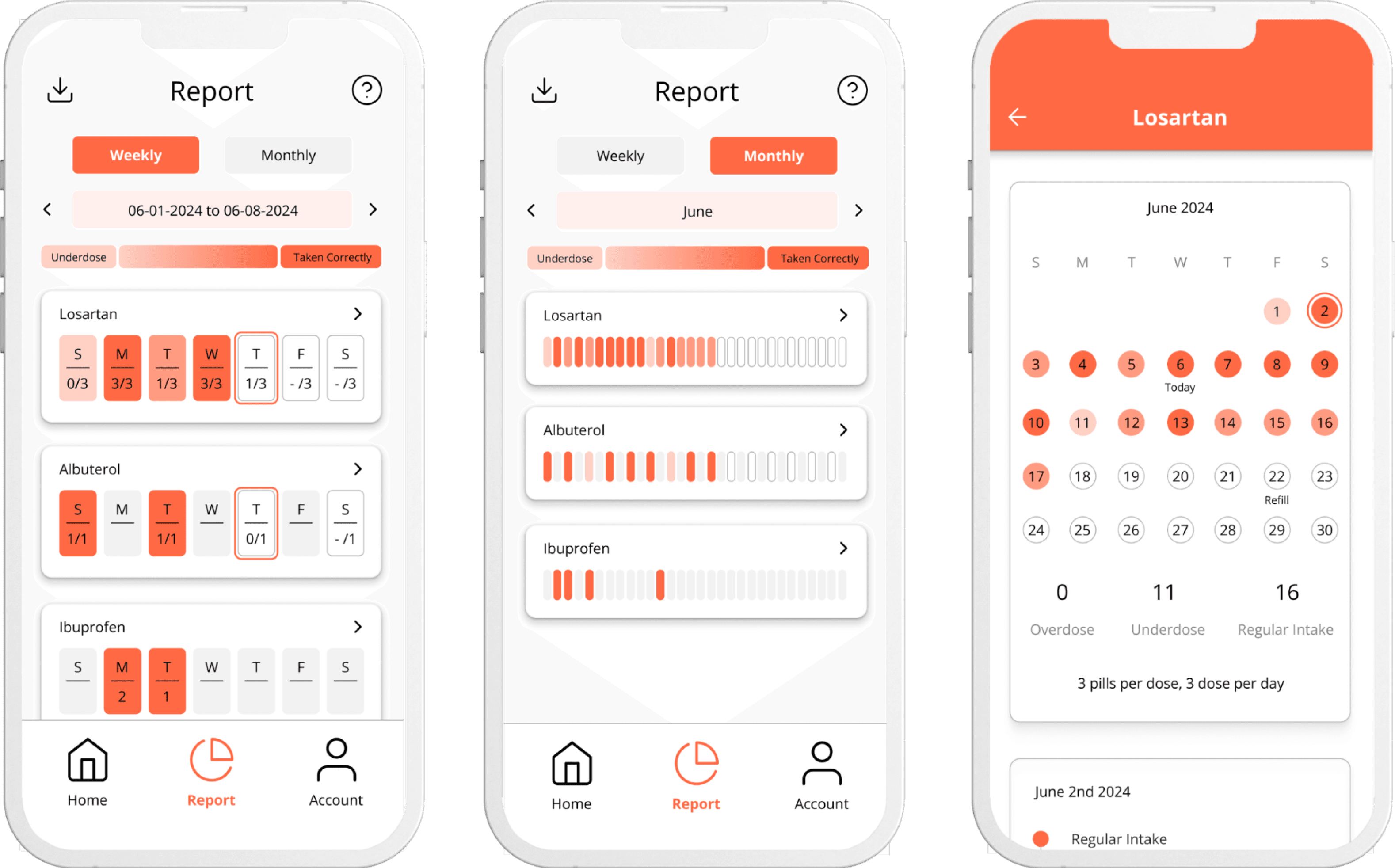
C · COLOR-CODED VISUAL RECORD
A long-term view that makes Patterns Readable at a glance.
Color makes trends immediately visible - helping older adults, caregivers, and clinicians spot patterns and have more productive conversations.
08 - USABILITY TESTING
Validating the Three Thing that mattered most.
We ran a round of surveys and interviews to validate the proposed solution and user flow, focusing on three hypotheses tied to our core design decisions.
30%
FASTER TASK COMPLETION
3X
FASTER FILE DISCOVERY
85%
USER SATISFACTION RATE
08 - HYPOTHESES & ITERATION
What Testing changed.
Two rounds of usability testing with 8 participants surfaced critical mismatches between our design intent and how users actually interpreted the interface.
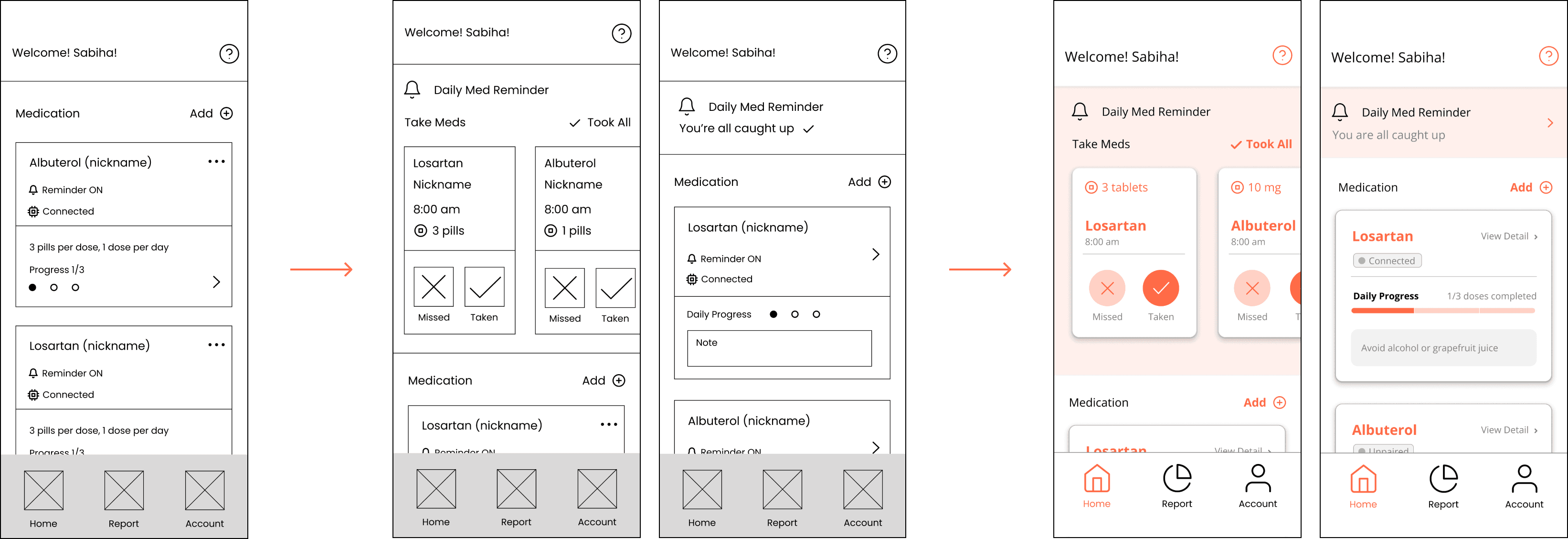
H1 · DAILY PROGRESS VIEW
+20% higher confidence
HYPOTHESIS - A daily progress bar helps users anticipate and plan their medication schedule, motivating them to stay consistent.
FINDING
Older adults reported feeling more reassured and aware of what was coming next when a dedicated daily progress view was present.
ITERATION
Integrated push notifications and progress into a single screen - interactions stayed consistent and focused.
Streamlined the layout and increased the visual weight of the progress visualization so it reads at a glance.
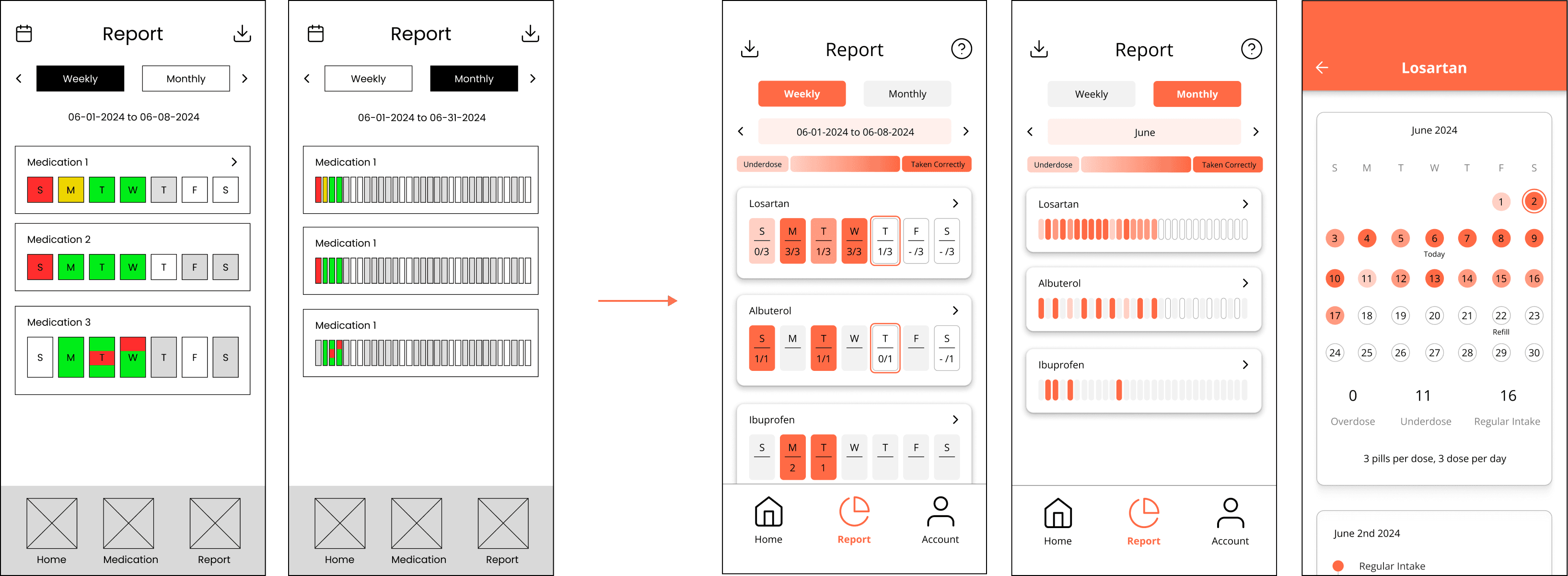
H2 · COLOUR CODED VISUAL RECORD
+30% faster information comprehension
HYPOTHESIS - The color-coded visual record helps users recognize patterns in their intake and communicate more effectively with their clinician.
FINDING
Participants found the color-coded view clearer than bar graphs, but some still needed a moment to interpret it - especially without supporting context.
ITERATION
Added legends and numeric indicators so information never relies on color alone - readable for users with color vision deficiencies and for clinicians scanning quickly.
H2 · COLOUR CODED VISUAL RECORD
80% of older adults preferred this interaction
HYPOTHESIS - A one-tap interaction lowers cognitive load and increases consistent use by making
recording simple, effortless, and error-free.
FINDING
Older adults loved the physical sticker and its simplicity. However, the setup process remained challenging for some caregivers and older adults.
ITERATION
Restructured onboarding as a conversational, step-by-step flow to reduce the intimidation that caregivers and older adults reported during initial setup.
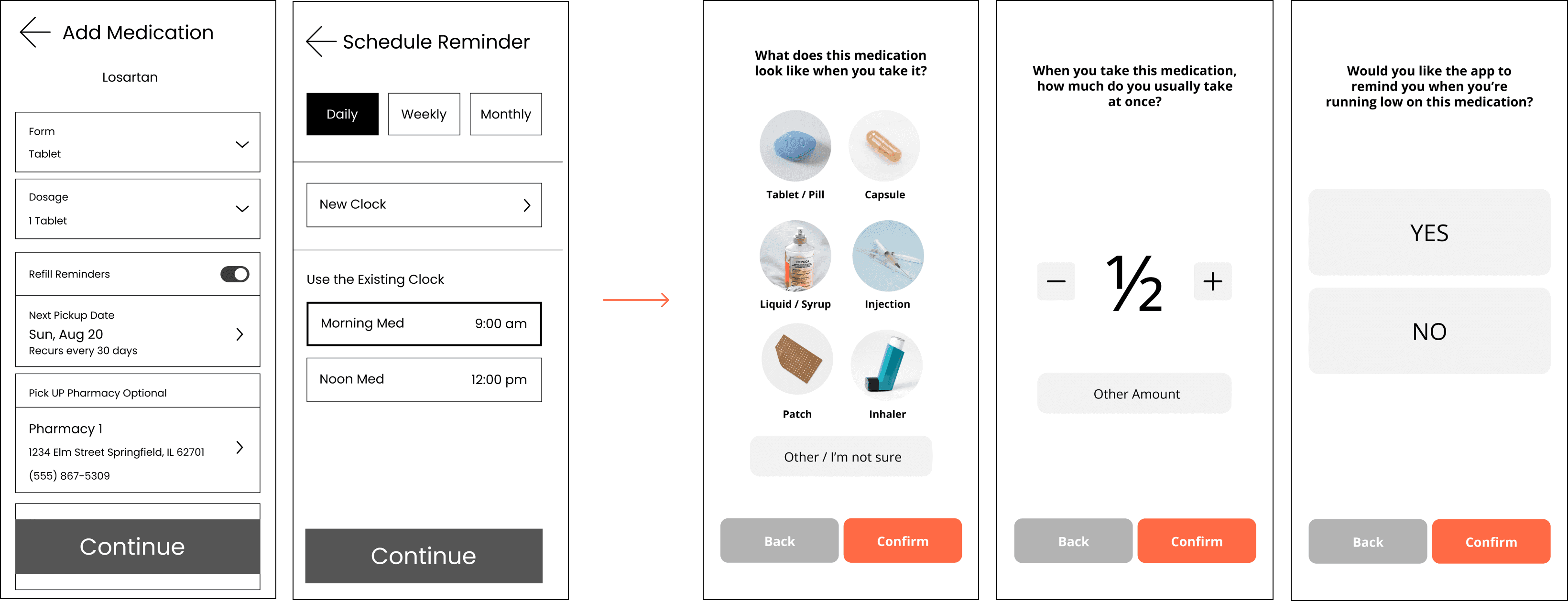
09 - THE FINAL DESIGN
The Shipped Experience.
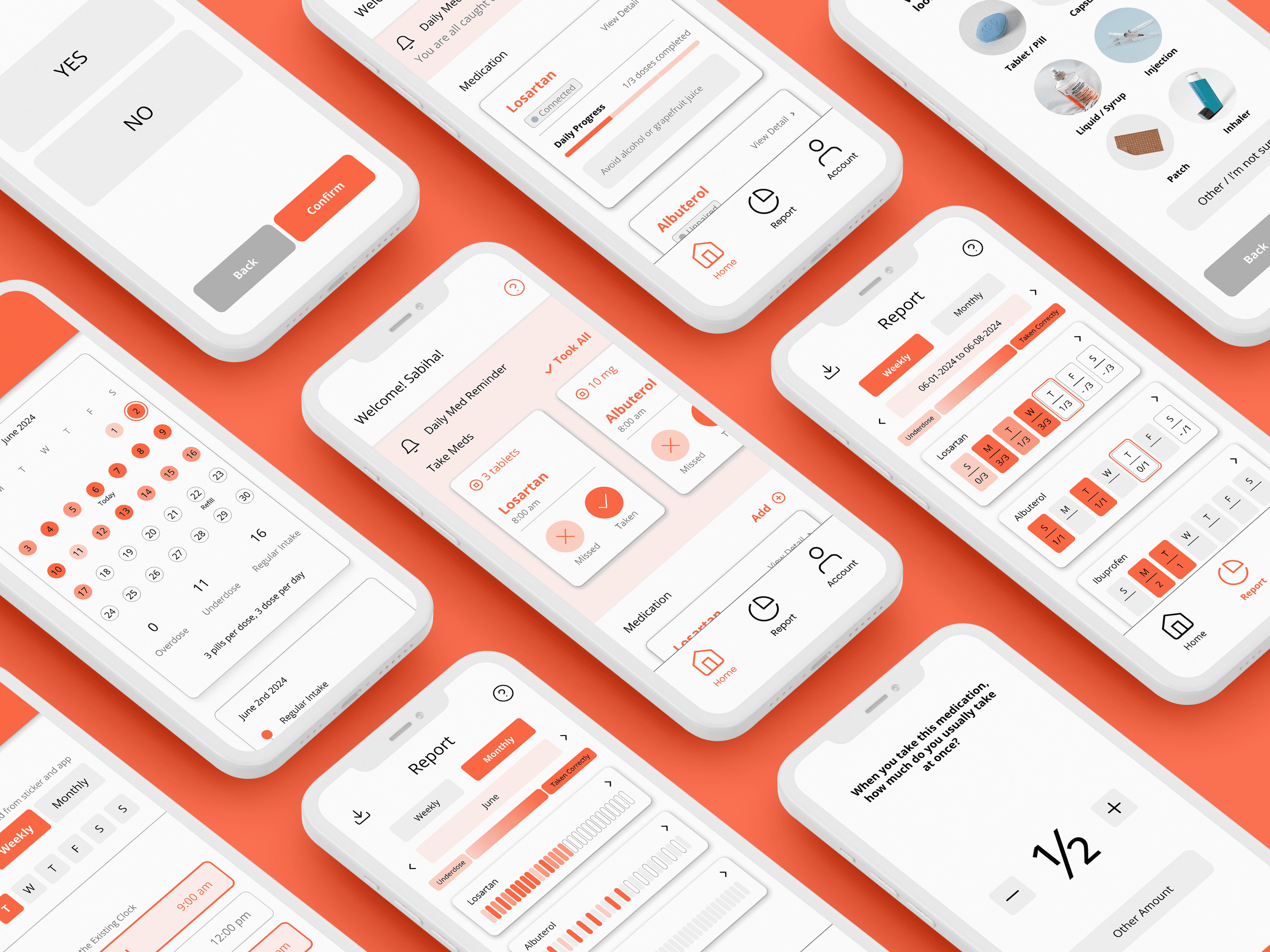
10 — RETROSPECTIVE
What I Learned.
Designing for older adults pushed me to question many assumptions about "modern" mobile UX. Patterns that feel intuitive to a younger user - swipe gestures, dense information layouts, layered navigation - often create friction for older users. What worked best was the opposite: physical interactions, generous spacing, plain language, and pairing every visual cue with a textual or numeric one.
The biggest lesson: the best technology for this audience is technology that gets out of the way. A single button on a sticker did more for adherence than any clever notification system we could design in the app.
© 2026 Cici Zhong — All Rights Reserved